


What is anodising?
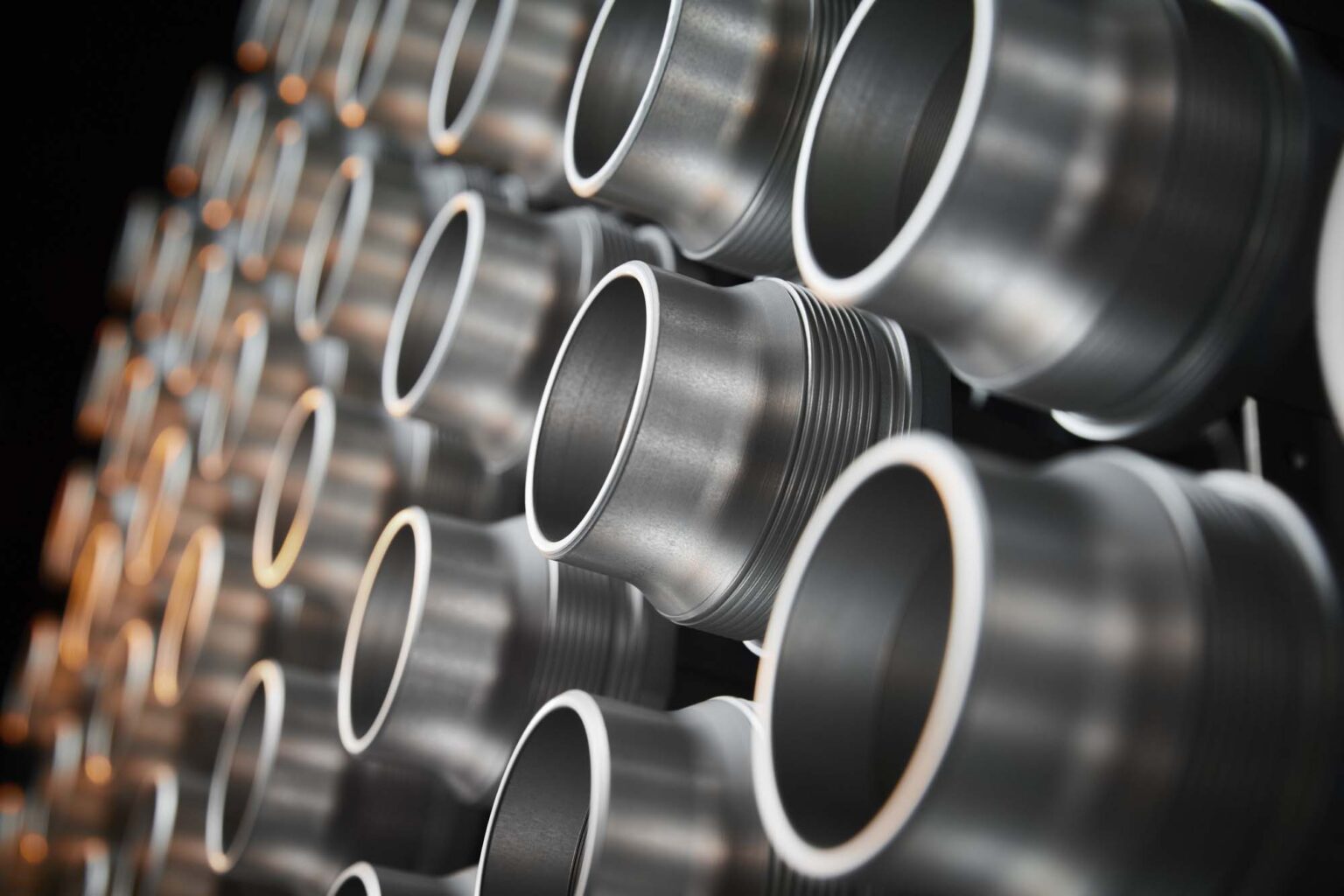
Anodising is an electrochemical process in which the aluminium surface is transformed into aluminium oxide (Al₂O₃) in a controlled environment. The layer formed on the aluminium profile is an oxide layer that provides protection against corrosion, among other things. At the same time, the layer extends the lifespan of the aluminium and serves as an ideal base for further surface treatments, such as colour coatings.
The advantages of aluminium anodising at Mifa
Mifa offers various anodising techniques that can be applied to almost all types of alloys. However, it is important to note that the alloy plays a key role in determining the colour of the anodised profile. Our engineers are happy to assist you with this.
Mifa has a range of in-house anodising techniques:
GLISSCOAT®
- Low friction coefficient
- Prevents slip-stick effect
- Corrosion protection
- Can be dyed black
HART-COAT® (hard anodising)
- Enhances visual properties
- Protects against wear and corrosion
- Reinforces various components
Technical anodising (standard anodising)
- Improves functional and decorative qualities
Our engineers are happy to help you make the right choice
| Mechanical pre-treatments | Chemical pre-treatments | Post-treatments |
| Blasting: machining in-house, glass bead via external partner | Standard (dimensionally stable) pickling: products delivered at final dimensions retain their dimensions | Colouring: absorbent color baths provide a deep black coloration; other colors are negotiable. |
| Tumbling: deburring and polishing technique using stones | Matte pickling: a matting of the surface ensures retouching of irregularities (not dimensionally stable) | Sealing: the open pore structure is compacted using hot water (96 °C), creating corrosion resistance |
| Belt grinding | (Semi-) gloss pickling: satin finish effect that also makes light scratches less visible (dimensionally stable is possible) | Application of primers and/or paints through wet painting (for project-based applications) |
| Polymer impregnation: see TUFRAM® under the polymer coatings process group or download our TUFRAM® whitepaper |
| Anodising Technique | GLISSCOAT® | HART-COAT® (hard anodising) | Technical anodising (normal anodising) |
| Applications |
|
|
|
| Type of anodising | Layer thickness (in µm) | Hardness | Application |
| Technical anodising (standard) | 5 – 25 | 200 – 400 | Decorative and industrial |
| HART-COAT® (hard anodising) | 25 – 150 | 400 – 600 | Wear-sensitive components |
| GLISSCOAT® | Variable | Low friction | Moving parts |
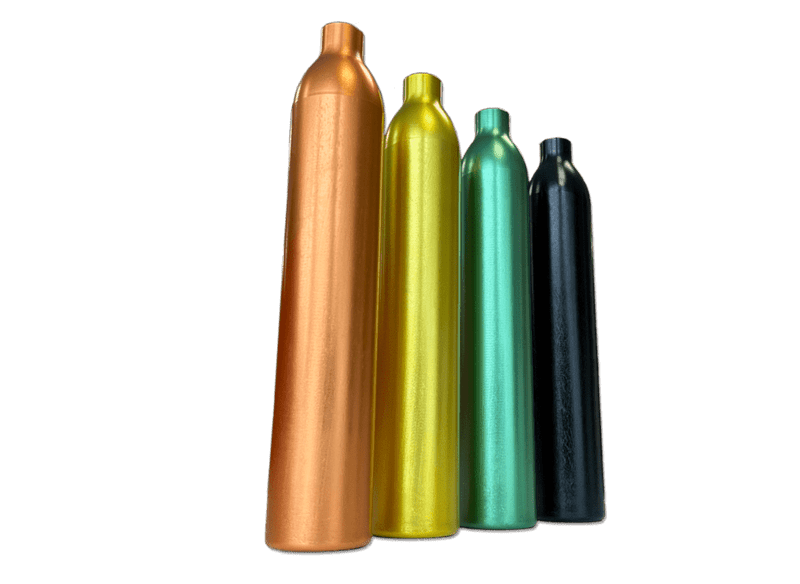
Featured: unique bright dip for aluminium profiles by SodaTASTE
At Mifa, we work closely with our customers to create the best possible end product. In collaboration with one of our knowledge partners, SodaTASTE, we colour-anodised aluminium bottles. Throughout the design phase, various steps were taken to achieve a truly unique product. This is a great example of how Mifa applies co-engineering to actively support the customer during the design process.
Curious about how we achieved this result together? Read our customer case study.
Layer properties of anodised aluminium profiles
During the anodising process, we achieve layer thicknesses between 5 and 20 µm, depending on the profile’s application, desired layer properties, and other parameters across different markets.
Key properties:
- Maximum layer thickness: Up to 20 µm
- Corrosion protection: Up to 2000 hours salt spray test – according to DIN 50021 ESS
- Hardness: Approx. 250 HV 0.025, depending on the alloy
- General standard: MIL-A-8625F Type I
Certifications
At Mifa, we hold various certifications, including ISO 9001 and ISO 14001. Additionally, Mifa is certified with AS9100 for the aerospace industry. This proves that Mifa’s production and operational facilities meet the high quality standards required by the aviation sector.
A sustainable contribution through Mifa Aluminium's production process
The anodising of aluminium profiles is a process that not only enhances the aesthetic value of aluminium but also makes a sustainable contribution to both industry and the environment. This process, which creates a protective oxide layer, offers several environmental and durability benefits:
- Corrosion resistance: Anodising forms a hard and durable oxide layer on the aluminium surface, making the profile resistant to rust and corrosion. This extends the lifespan of aluminium components, resulting in less waste due to fewer replacements.
- Energy efficiency: Although the anodising process uses electricity and chemical reactions, it is performed in a controlled environment. Compared to alternative methods such as galvanisation, energy consumption is relatively low.
- Recyclability: Aluminium is naturally recyclable, and anodised aluminium profiles retain their properties throughout the recycling process.
- Less harmful: Anodising is a cleaner alternative to traditional paint and coating systems, which often contain harmful solvents and chemicals. As such, anodising contributes to cleaner production and a reduced environmental impact.
Get in touch with us
Call or email Fons
Manager Surface Treatment