Exhibitions 2026 Read more >

Operational excellence for better results

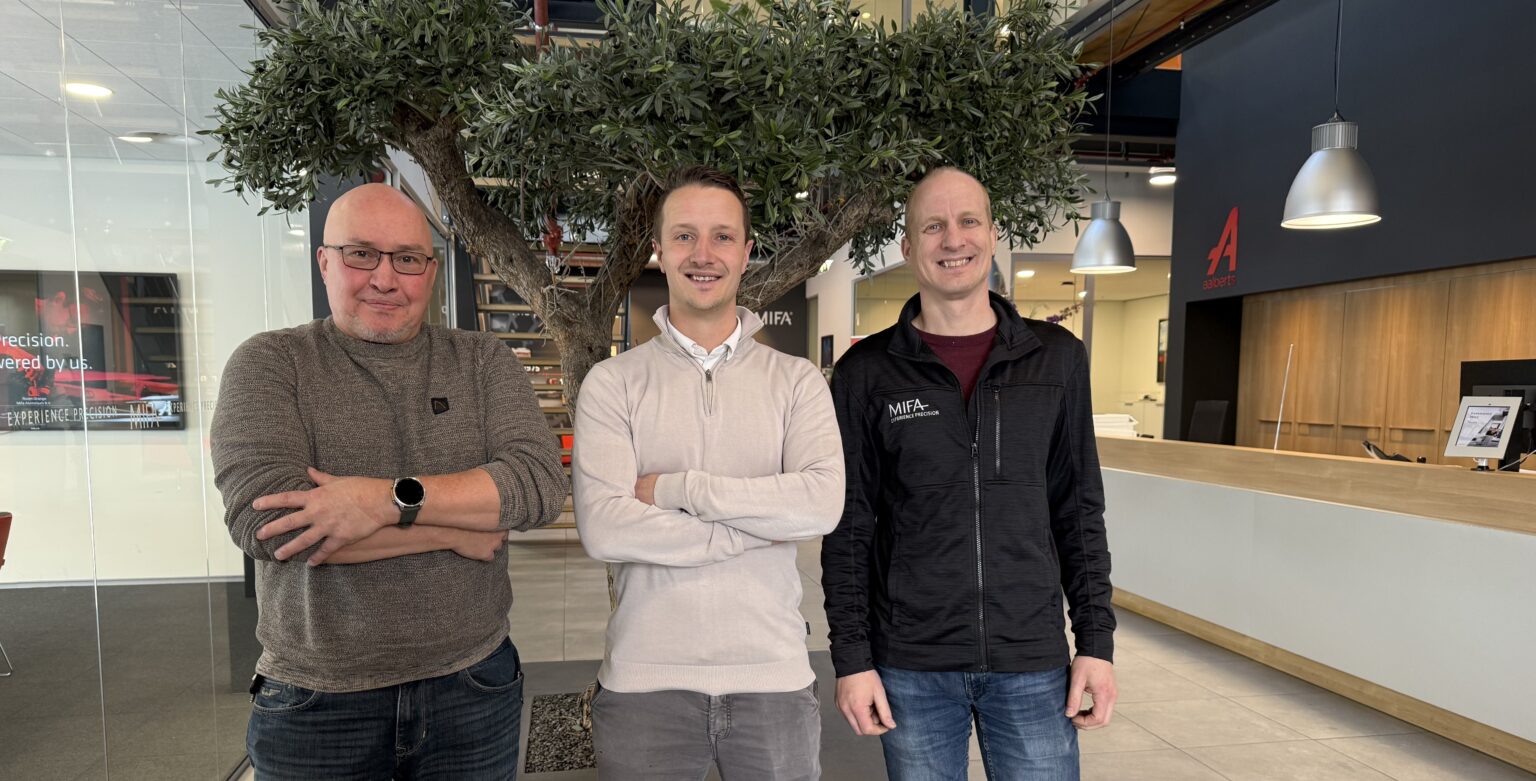
Interview with Rick Voorter en Ad Jegers

Operational Excellence is an approach we have been focusing on intensively over the past two years. In this interview, Rick Voorter and Ad Jegers explain how Operational Excellence, in collaboration with Mark Oostveen, has become an integral part of our Mifa culture.

Why Operational Excellence?

Operational Excellence is intended to continuously improve products and processes, internally translated into the three S’s: Smarter, Cleaner and Sharper (Slimmer, Schoner en Scherper). The ultimate result is higher customer and employee satisfaction, more efficient productivity, a safer working environment, or a higher-quality product.

The philosophy of continuous improvement was originally sparked by Geert Smits, who introduced the Green Belt training at Mifa during his time there. As a result, Mifa had several Green and Black Belts. However, these initiatives were taken up as standalone projects at the time and later faded into the background.
“To address this in a structural way and ensure it is not let go again within the organisation, we have therefore breathed new life into it. Especially in a time when it is becoming increasingly difficult to compete on speed and price, it is essential to also focus internally on organising everything as effectively and efficiently as possible.”

Operational Excellence is built on a number of core principles as its foundation, such as putting customer value first, standardisation (including the 7S), eliminating waste, and continuous improvement (Kaizens and projects). This foundation is intended to encourage a mindset of continuous improvement. With 7S, you can not only see that everything is tidy, but also identify deviations more easily.
“We therefore work from applying methods, to improvement, and ultimately to standardisation. Over time, this should become routine and an integral part of our Mifa culture.”

How does Operational Excellence work?

In 2023, the Board of Directors gave the go-ahead for the further professionalisation of the organisation. Within the management team, it was subsequently recognised that there is significant internal potential for improving processes and products. For this reason, Operational Excellence was chosen as a strategic approach.

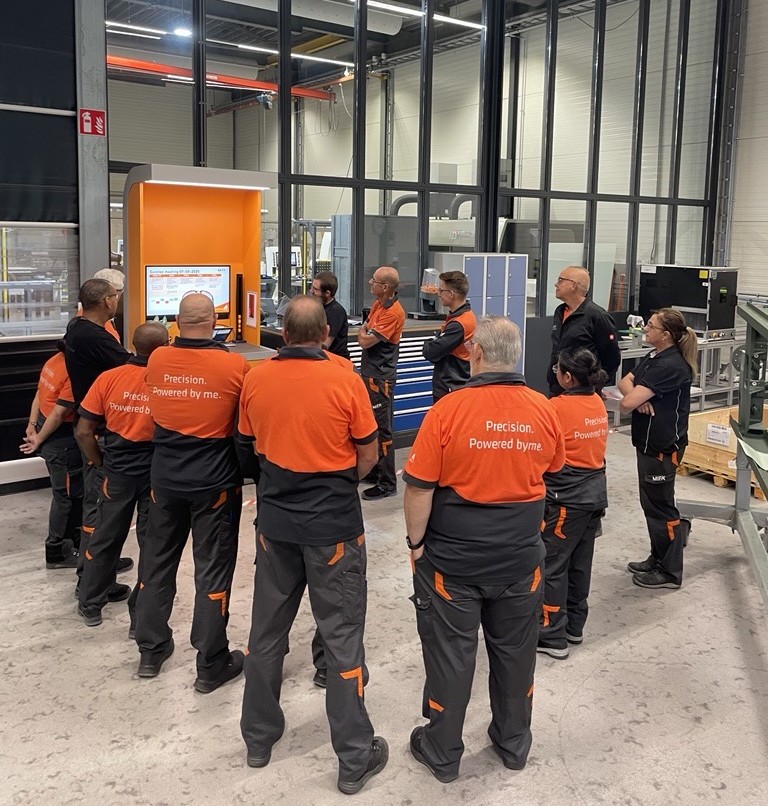
“We started in production together with department management and employees. Although OE was a new concept, we were pleased to see that it was embraced and that improvements and collaborations were quickly established. Many people are already engaged in continuous improvement without realising it. For many, it is simply in their nature.”

“Often we observe, have a chat and ask: what do you think yourself? Then we turn it into a Quick & Easy.” Ad has been with Mifa for more than 40 years, enabling him to apply his expertise optimally in production. “It is not only about standardising or implementing new ideas, but also about passing on existing (technical) ways of working to the new generation. It is a combination of development and improvement.”

“Operational Excellence means working smarter, cleaner and sharper in products and processes in order to increase our customer value.”
The result of operational excellence

The results are not always immediately measurable, but ultimately the time and resources invested should lead to improved productivity, safety or quality.

“As an example: we track Quick & Easy improvements by measuring them in percentages, allowing us to monitor progress per department. By now, all production departments together have submitted and completed 75 Kaizens, making a significant contribution to working smarter, cleaner and sharper in products and processes. Quantifying the results is nice, but it is just as important to celebrate these successes.”

“One of the most important personal outcomes is motivating our colleagues and strengthening collaboration between departments. We receive feedback that colleagues see how it makes their work more enjoyable and delivers tangible results. In line with our core value ‘share and learn’, we see that colleagues share their successes with other departments and are themselves inspired to come up with new initiatives.”

A practical example

“One of the most important successes of the past year was the introduction of a new way of working for a Mifa customer: Kongsberg. Last year, they expressed the desire to increase the volume of defence frames by 60%. However, the 3D measuring machine and the assembly process formed a bottleneck (a constraint in a process that limits throughput). To be able to deliver a higher number of frames, it was essential to resolve these bottlenecks and reduce process time.”

This bottleneck was resolved through an improvement initiative by the Finishing team. “To reduce repetitive (inspection) activities, we installed welding tables and filmed the new process. This allowed us to clearly see where changes to the layout were needed in order to optimise the process. We are now able to deliver frames of the same quality without using the 3D measuring machine.”

Collaboration with Aalberts

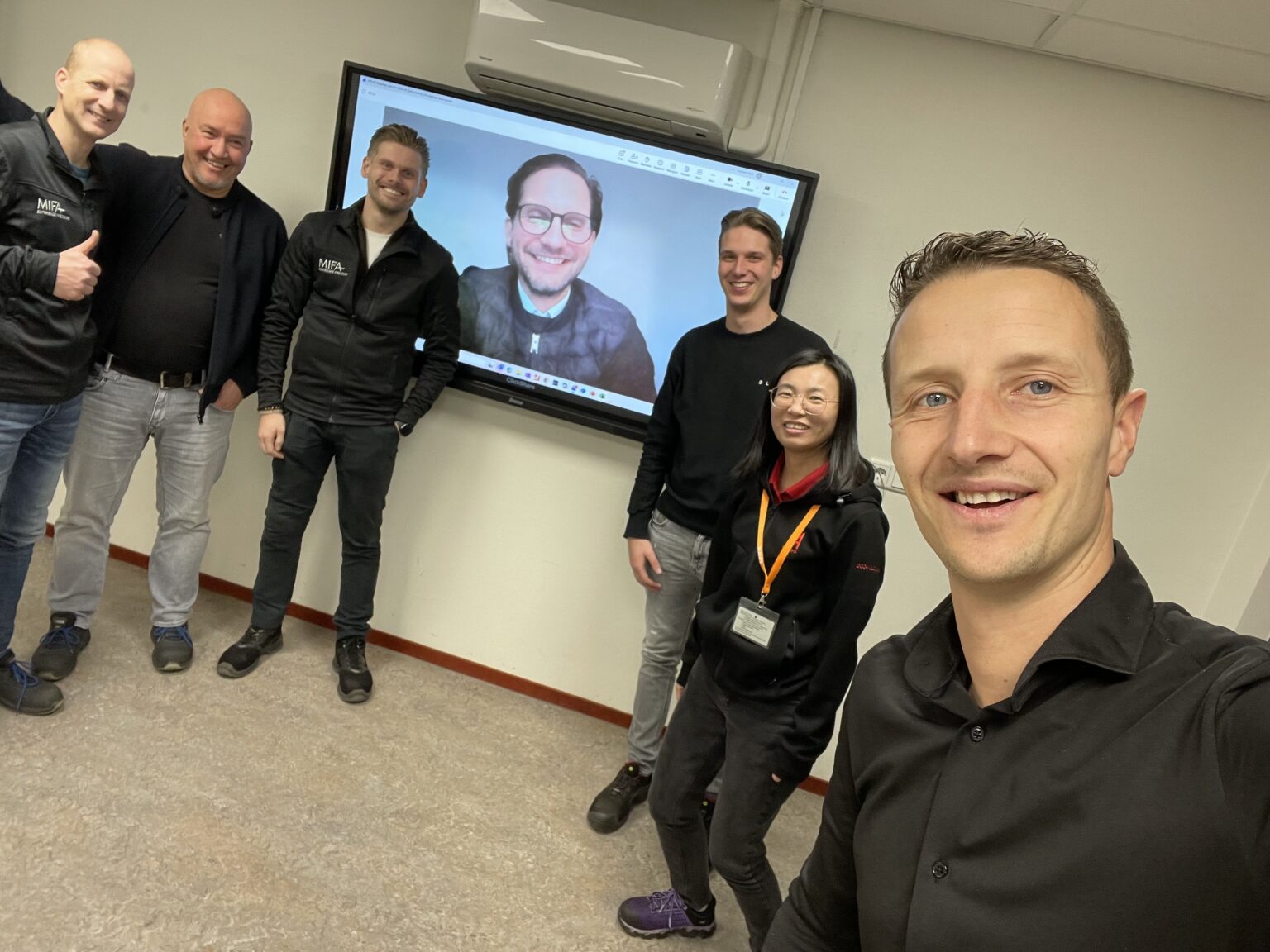
As part of the Aalberts Group, Mifa is part of a network group with other Aalberts companies. Within this group, we contribute to the Operational Excellence approach and further improve our results by sharing experiences. “What is particularly valuable is that experiences and expertise can be shared wherever there is synergy,” Rick concludes.
Aalberts logo wit